Call James on 07973 796 406 for further information

Call James on 07973 796 406 for further information
Ever wondered if a disused horse paddock can become a wildflower paradise? The answer is a resounding yes!
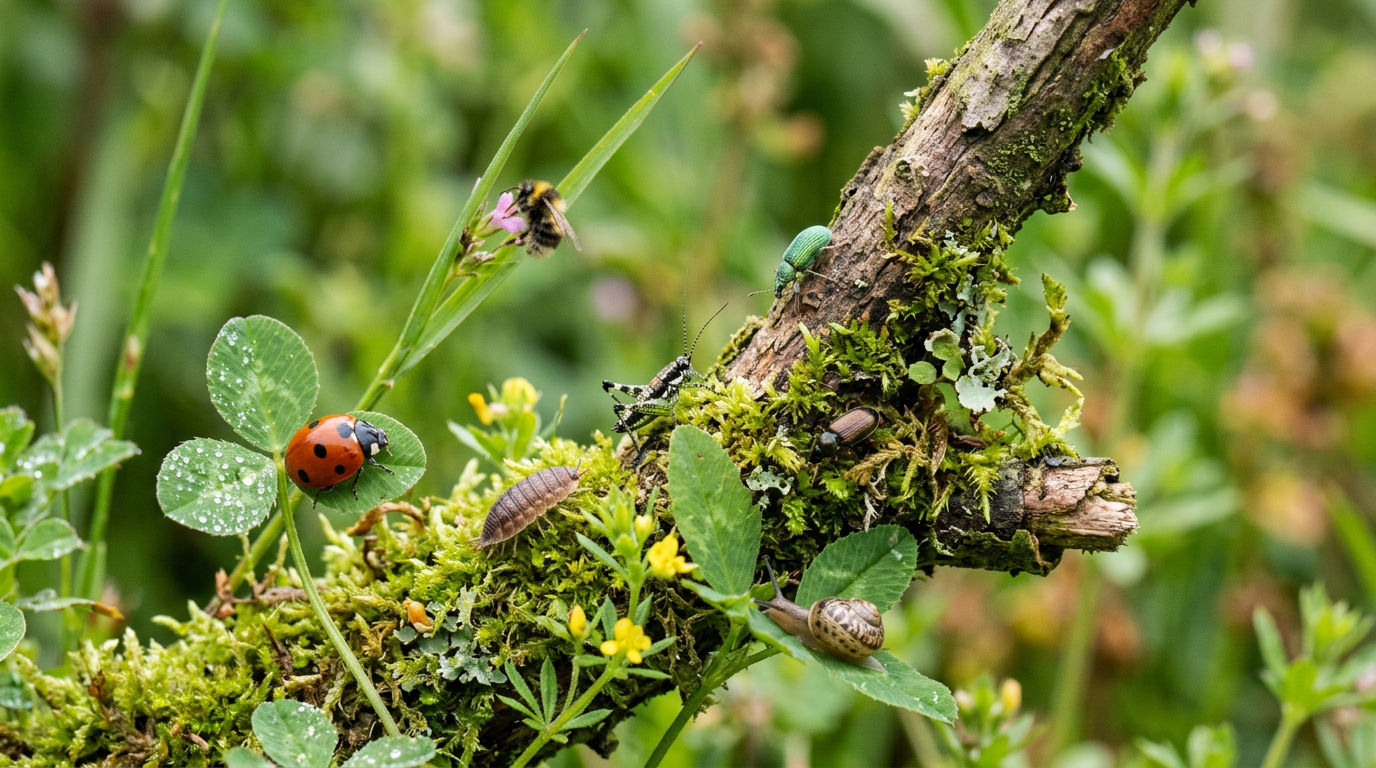
When you think about the countryside, you probably picture rolling fields, ancient woodlands, grazing livestock and colourful wildflowers. Yet beneath our feet and all around us lies an extraordinary world that supports every one of these landscapes - insects and soil biology.
These tiny creatures are easy to overlook, other than when they hit your windscreen, but they are responsible for many of the natural processes that make farming and wildlife survival possible. They pollinate crops and wildflowers, they recycle nutrients, they improve soil structure and provide food for birds, bats and other wildlife. Without healthy insect populations, much of the countryside as we know it simply could not function.
Numbers of many insect species have declined dramatically over recent decades. Habitat loss, soil degradation, use of pesticides and changes in land management have all played a part. But the encouraging news is that many landowners and farmers are now looking at ways to reverse this trend while maintaining productive and profitable businesses.
The answer often starts beneath our feet, in the soil.
The UK Centre for Ecology & Hydrology (UKCEH) highlights just how remarkable healthy soil really is. Microbes are central to all life on Earth due to their huge diversity in form and function. A single teaspoon of topsoil can contain around one billion individual microscopic cells and approximately 10,000 different species. These organisms include bacteria, fungi, protozoa, nematodes and countless other forms of life that are invisible to the naked eye. Together they form a complex soil food web that drives nutrient cycling, improves soil structure, supports plant growth and ultimately underpins agricultural productivity.
Healthy soil is far more than just a growing medium. It acts as a living ecosystem that stores carbon, captures rainfall, reduces erosion and helps crops withstand drought and extreme weather. When soil biology thrives, plants work with the soil food web and are better able to access nutrients naturally, reducing reliance on expensive inputs.
This understanding has led to growing interest in regenerative farming. Although there is no single definition, regenerative agriculture is generally based around five key principles:
1. Minimise soil disturbance.
2. Keep the soil covered.
3. Maintain living roots in the ground for as much of the year as possible.
4. Increase plant diversity.
5. Integrate livestock wherever practical.
These principles work together to rebuild soil function and create conditions that support insects, wildlife and productive farming systems.
Of the five principles, livestock integration, is often the most challenging for modern arable farms. Over recent decades, many farms have specialised, resulting in livestock and arable enterprises becoming increasingly separated. Yet in the past, cattle played a vital role in traditional farming systems by recycling nutrients, stimulating plant growth and helping maintain healthy grassland habitats.
Learning from the past is one of the reasons why I have become involved in developing Coln Native Livestock. The aim is to help reintroduce carefully managed cattle grazing into arable rotations and conservation projects. By using livestock as a management tool, farmers can improve their soil health, increase organic matter, support biodiversity and ultimately create more resilient farming systems.
Conservation grazing is another important part of this approach. Many of our most valuable grassland habitats evolved alongside grazing animals. Native cattle such as Sussex, Lincoln Red or British White can help create the varied vegetation structure needed by insects, ground-nesting birds and a wide range of other species. This well managed grazing encourages a mosaic of grasses and flowering plants, providing food and shelter throughout the year.
Productive farming and nature recovery are not mutually exclusive and in most cases they can support each other. Farms with healthy soils are often more resilient and efficient, using less artificial fertilizer and pesticides. Diverse landscapes can better support pollinators and beneficial insects while grazing livestock can improve both biodiversity and soil function. Environmental grant schemes can also provide additional income while delivering public benefits.
As a land management consultant, I work with farmers and landowners to help them understand what they want from their land and then develop practical solutions to achieve those objectives. Whether the goal is increasing profitability, improving wildlife habitats, restoring soil health or creating a more resilient farming system, the starting point is often the same – the need to understand how natural processes work and learning how to work with them rather than against them.
The future of our English farms and countryside will depend upon healthy soils, thriving insect populations and farming systems that balance production with Nature’s needs. If we can create the conditions for insects and soil biology to flourish, many of the wider environmental and agricultural challenges become much easier to solve.
Sometimes the smallest creatures make the biggest difference.
For more information on regenerative land management, soil health and biodiversity enhancement, visit james-gillies.com.
James Gillies is a land management consultant and Fellow of the Society of Agriculture working with farmers and landowners across England to improve profitability, soil health and biodiversity. He is also a Director of Coln Native Livestock, a business focused on integrating cattle into regenerative farming and conservation grazing systems. Learn more at james-gillies.com.
If you're inspired to create your own natural haven, book a free consultation
WildflowerMeadow #Biodiversity #SustainableLandscaping #LandManagement #NatureLovers